The AI expectations gap
未来几年,AI 将如何重塑经济?围绕 AI 对经济未来影响的分歧,核心来源是什么?本文基于新的调查证据,探讨了这些问题。
Szymon Sacher, Tess Cotter, Charles I. Jones, Anton Korinek, Peter McCrory
Key findings
- US adults expect AI capabilities to advance rapidly in the coming years; Anthropic staff expect even faster progress; 39% of US adults and 91% of staff expect that AI will be able to make a Nobel-level discovery by 2030.
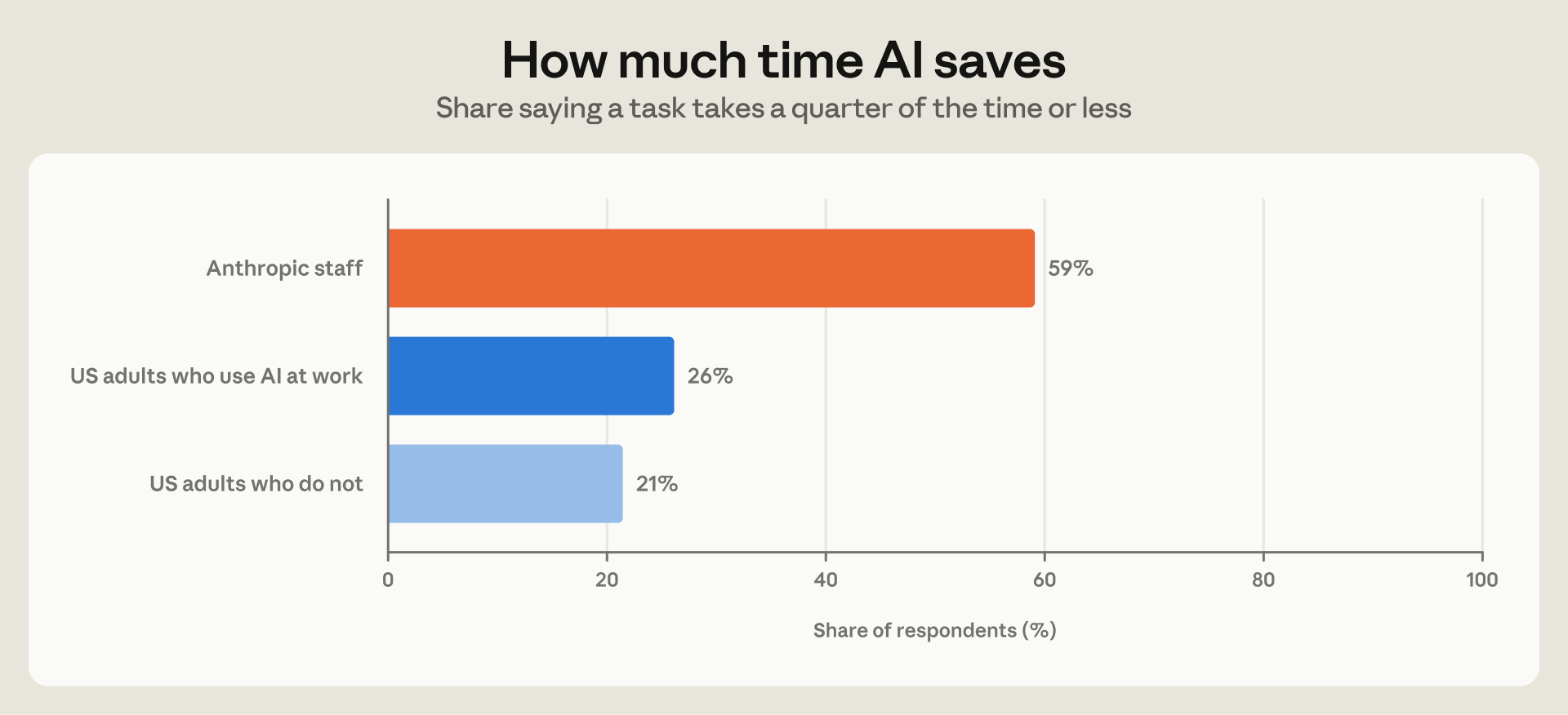
- Anthropic staff expect much larger productivity gains from AI on the tasks it is well-suited for. Among US adults who use AI at work, 26% say a task takes a quarter of the time or less with AI, compared to 59% of Anthropic staff.
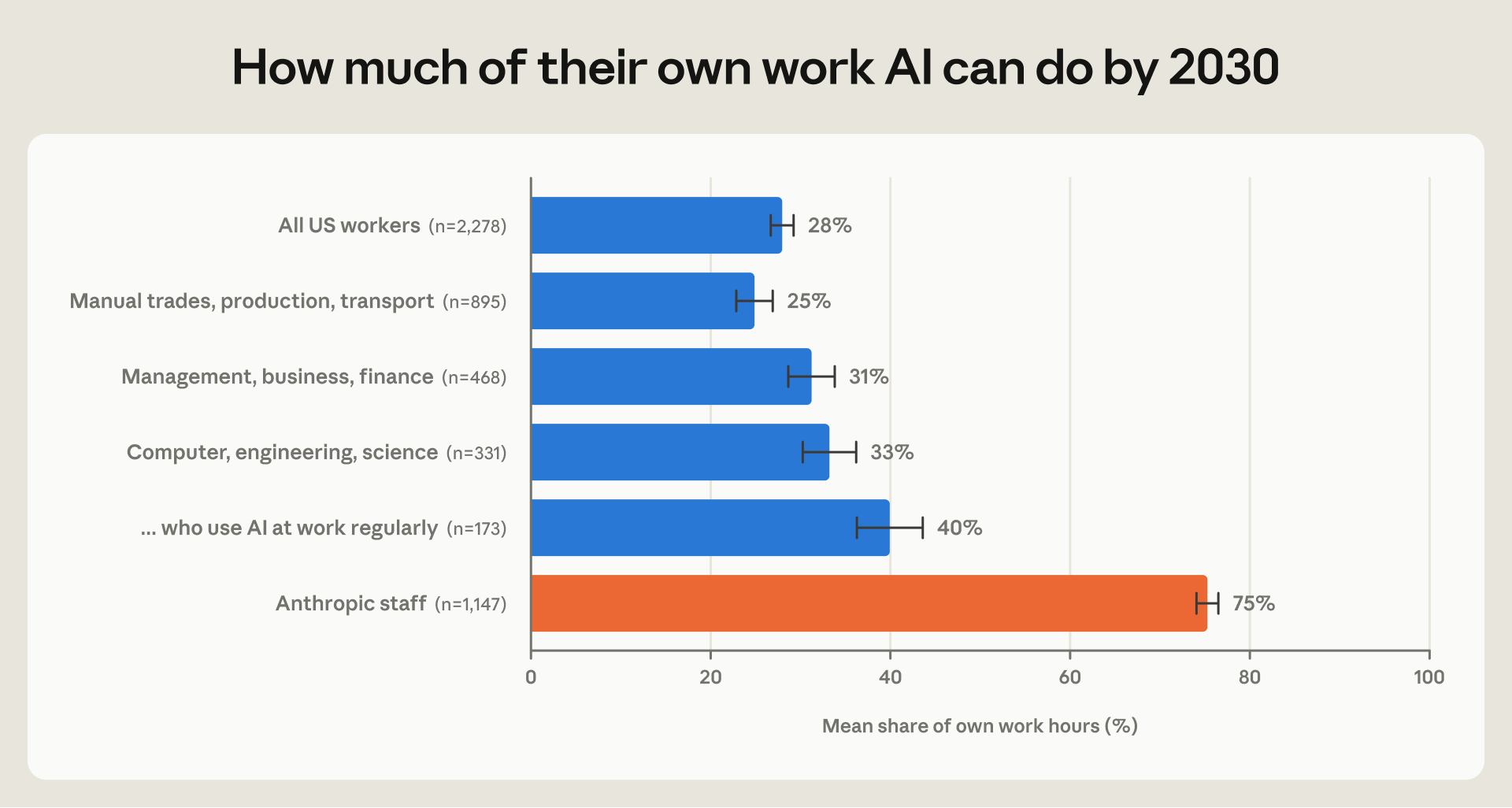
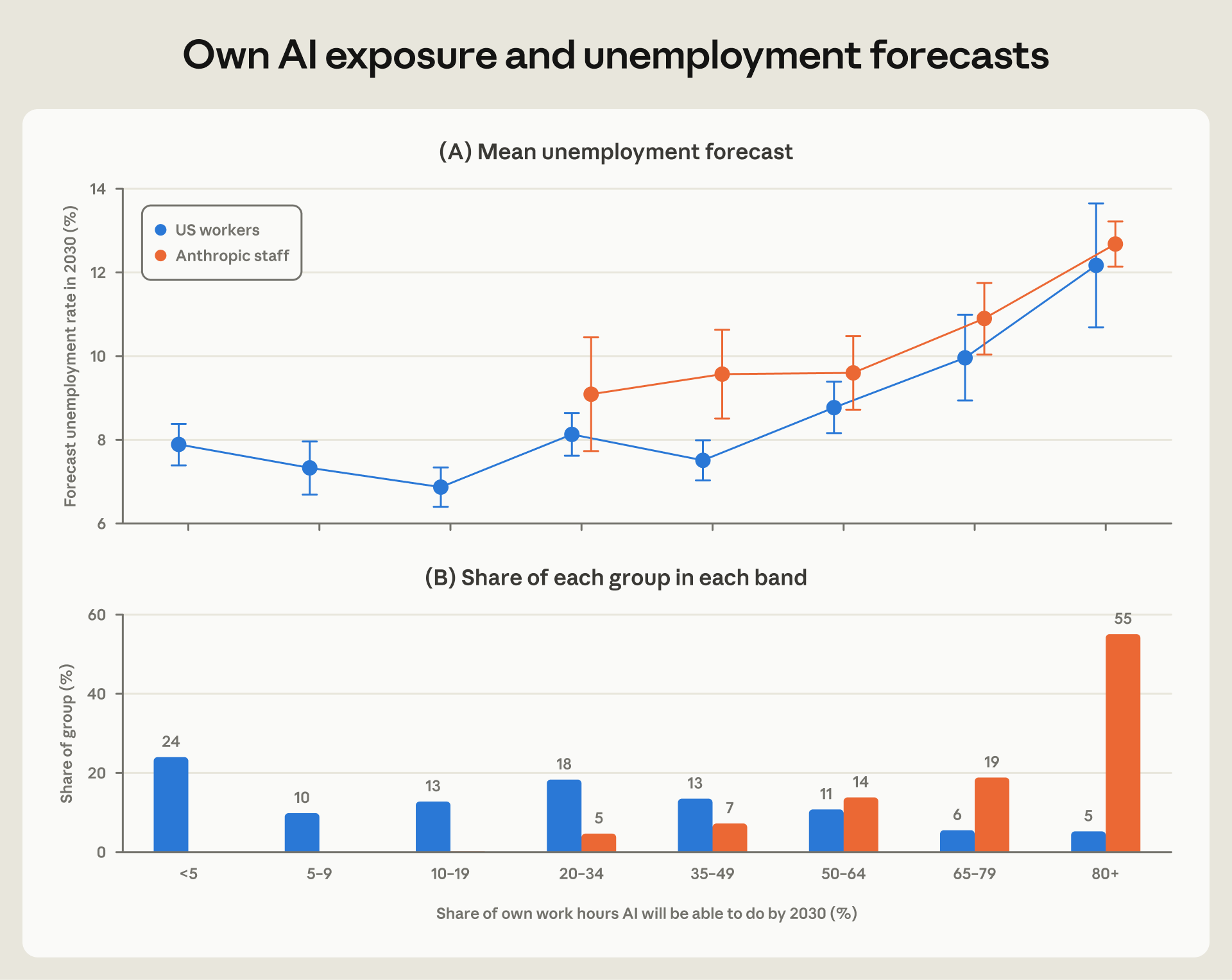
- When it comes to their own job, over half of Anthropic staff expect AI to be able to do at least 80% of their current work by 2030, compared with 5% of US workers.
- Among both US workers and Anthropic staff, people who expect AI to do more of their own work anticipate higher unemployment. While there are differences in beliefs about future capabilities, the perceived link between how AI might change one’s own job and broader unemployment is very similar for both groups.
Introduction
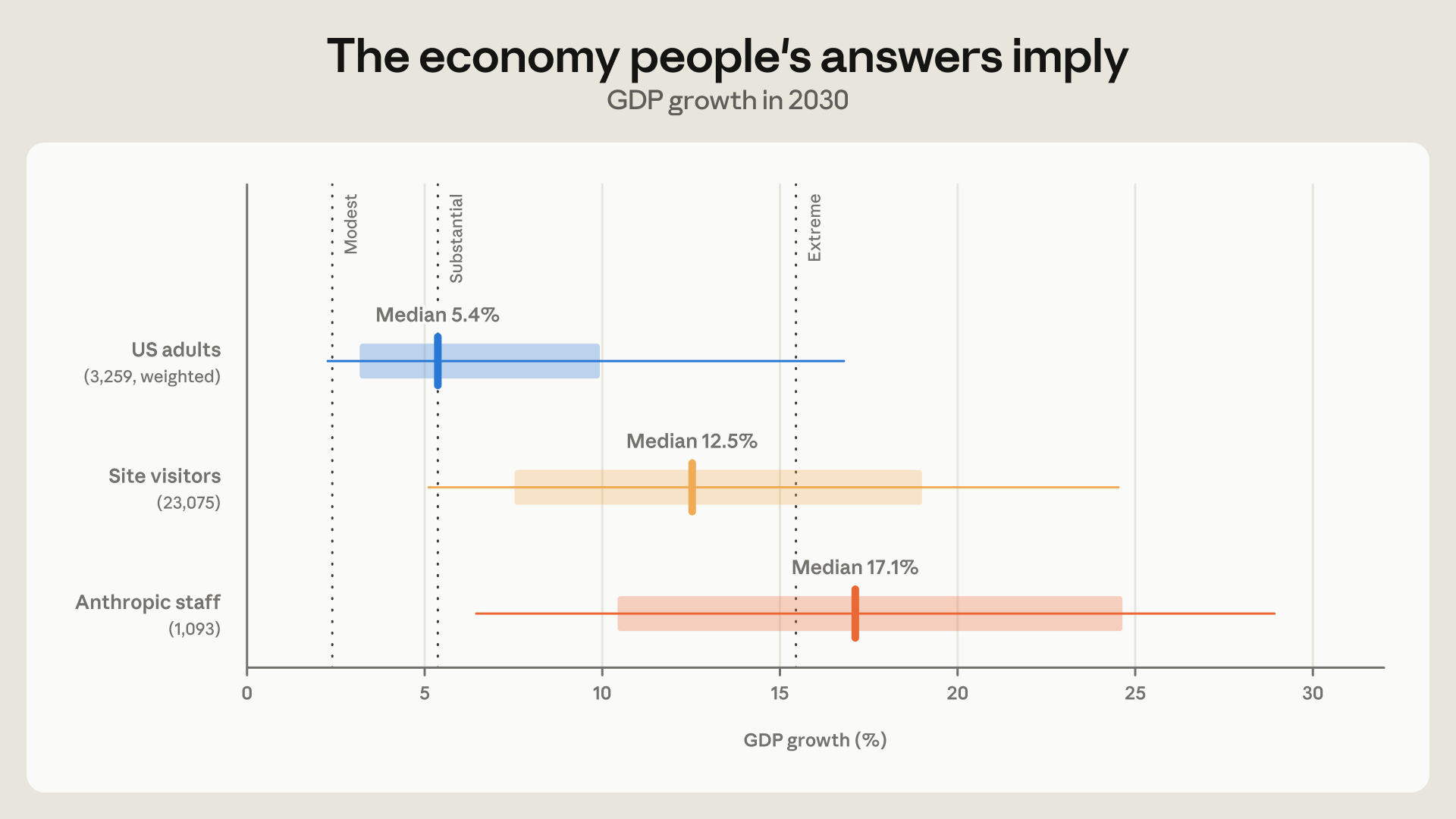
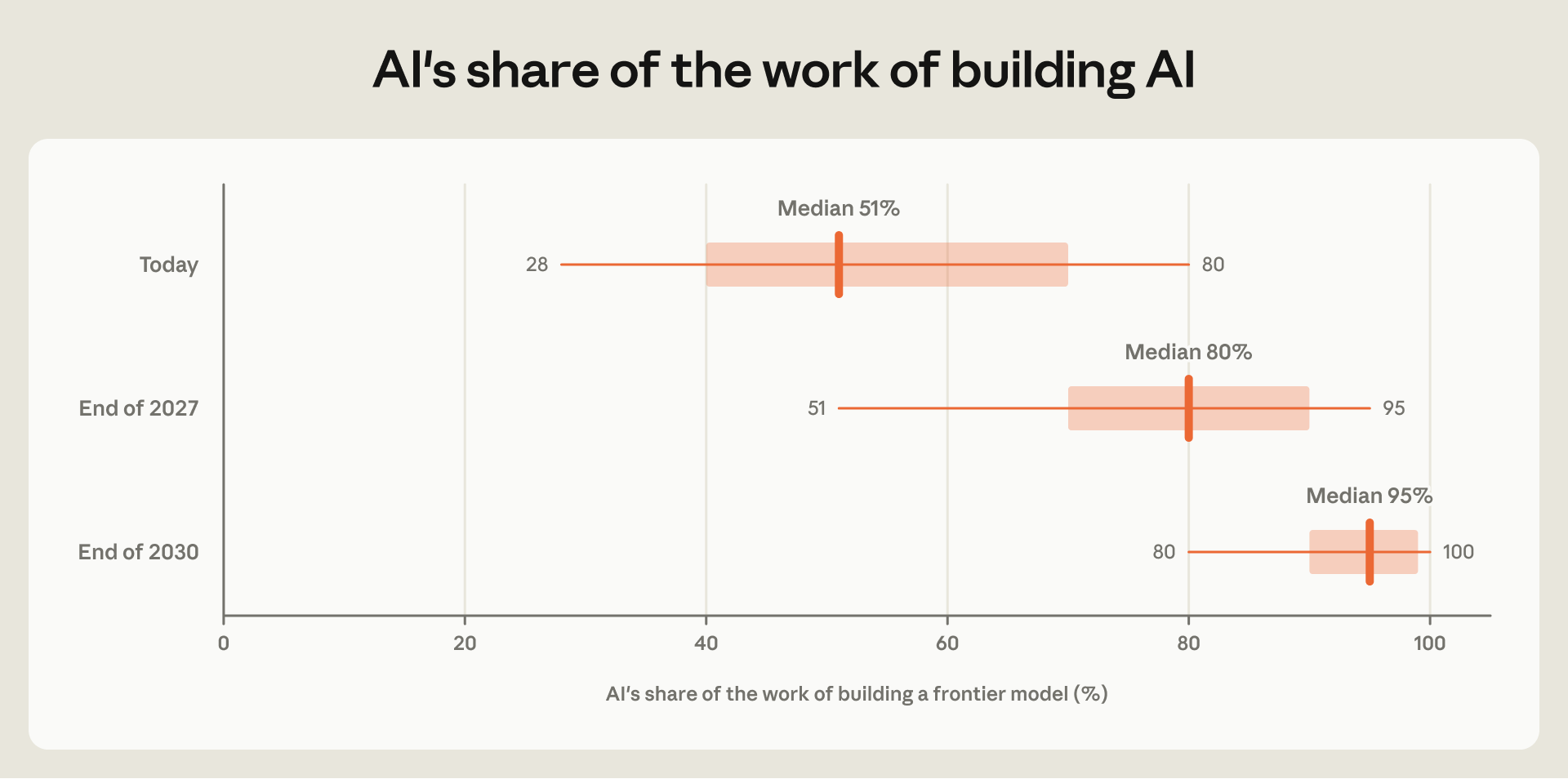
How will AI reshape the economy in the years ahead? AI capabilities are advancing rapidly, and the possibility that future AI models may be able to build their own successors (recursive self-improvement) could further accelerate the rate of progress. How quickly this might materialize and to what extent is unclear. Forecasts vary widely and are fiercely debated.